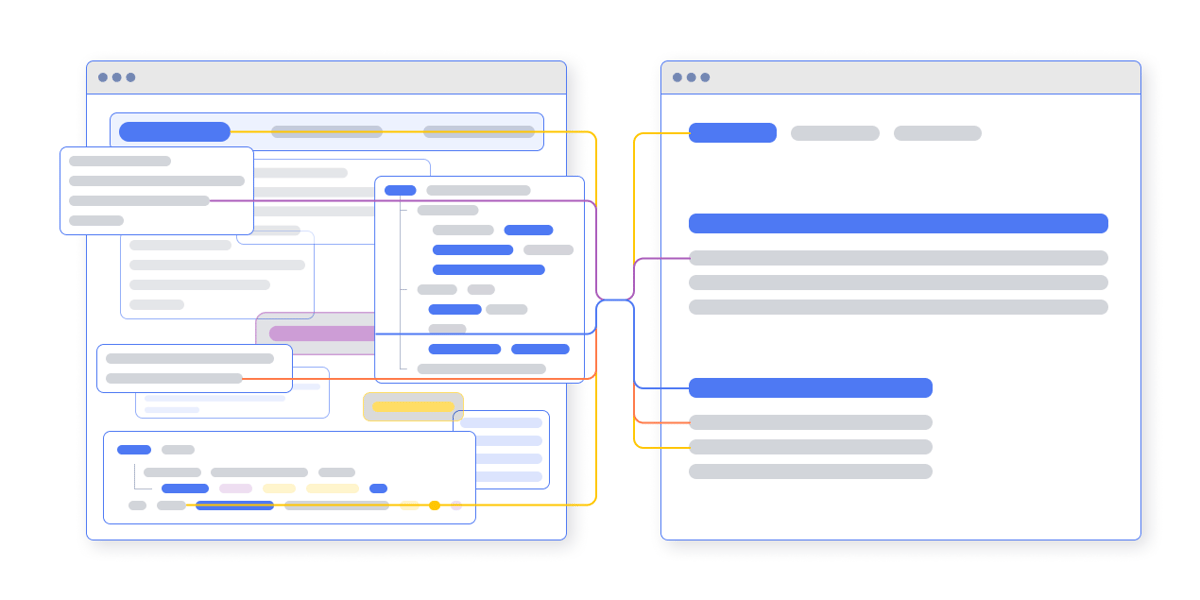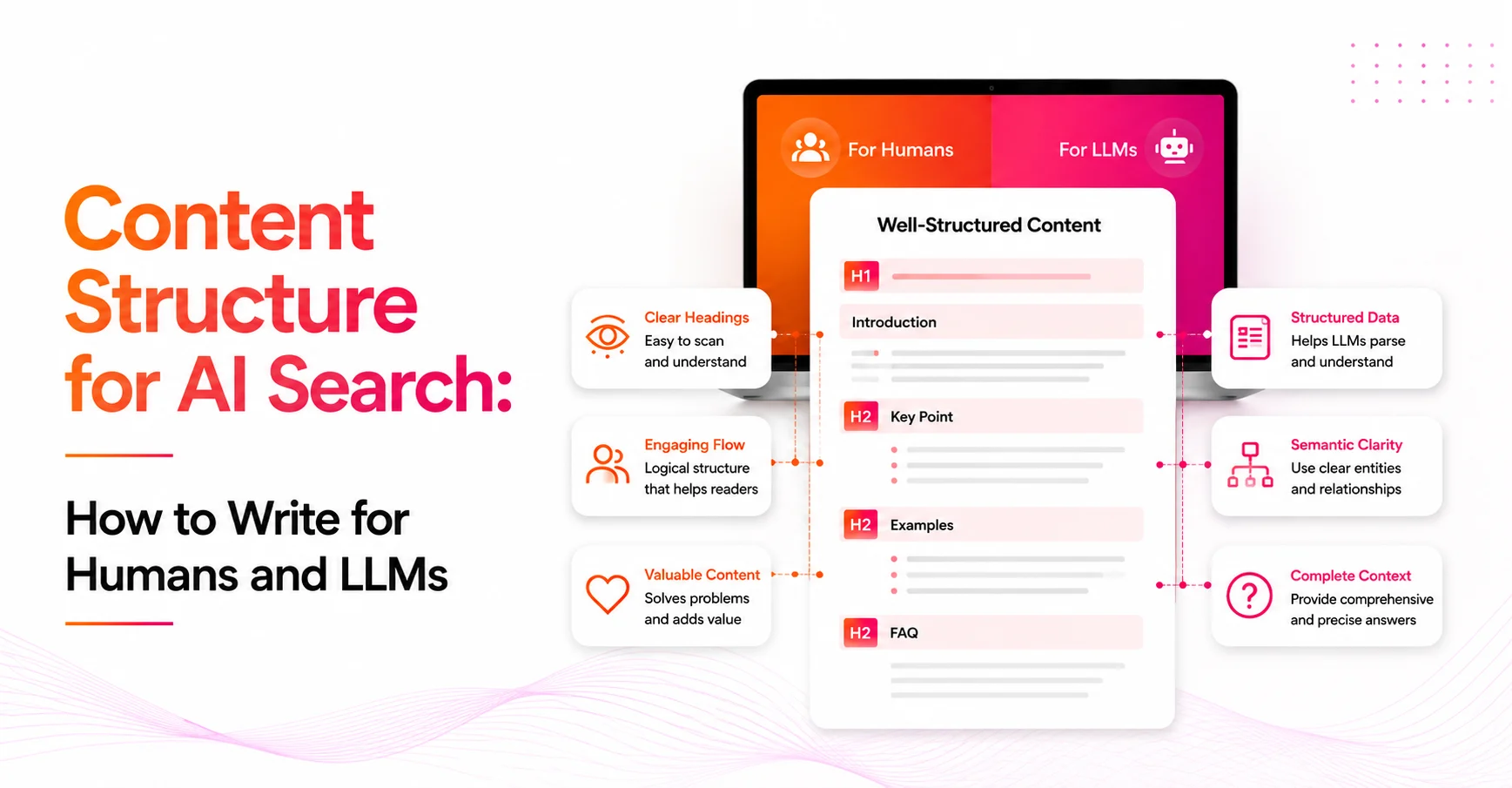
AI-readable pages should use a clear heading hierarchy, short focused paragraphs, and semantic HTML so both people and systems can understand the page quickly.
Practical content structure
- Use one main title that clearly matches the page topic.
- Break the page into logical sections with descriptive headings and subheadings.
- Keep each paragraph focused on one idea.
- Put answer-first language near the top, then add detail below.
- Use bulleted or numbered lists for steps, criteria, comparisons, and procedures.
- Define key terms clearly and place important definitions near the beginning.
- Include tables when relationships or comparisons need to be easy to extract.
- Use semantic HTML elements like
main,article,section,header,nav, andasideto signal meaning. - Add structured data such as Schema.org/JSON-LD when relevant to the page content.
- Provide metadata like publication date, author, and topic tags where useful.
Helpful page patterns
- Title
- Short summary or direct answer
- Main sections with H2s
- Subsections with H3s
- Lists for actions or facts
- Tables for comparison
- Glossary or FAQ for dense topics
What to avoid
- Long unbroken paragraphs
- Skipping heading levels
- Vague headings like “Miscellaneous”
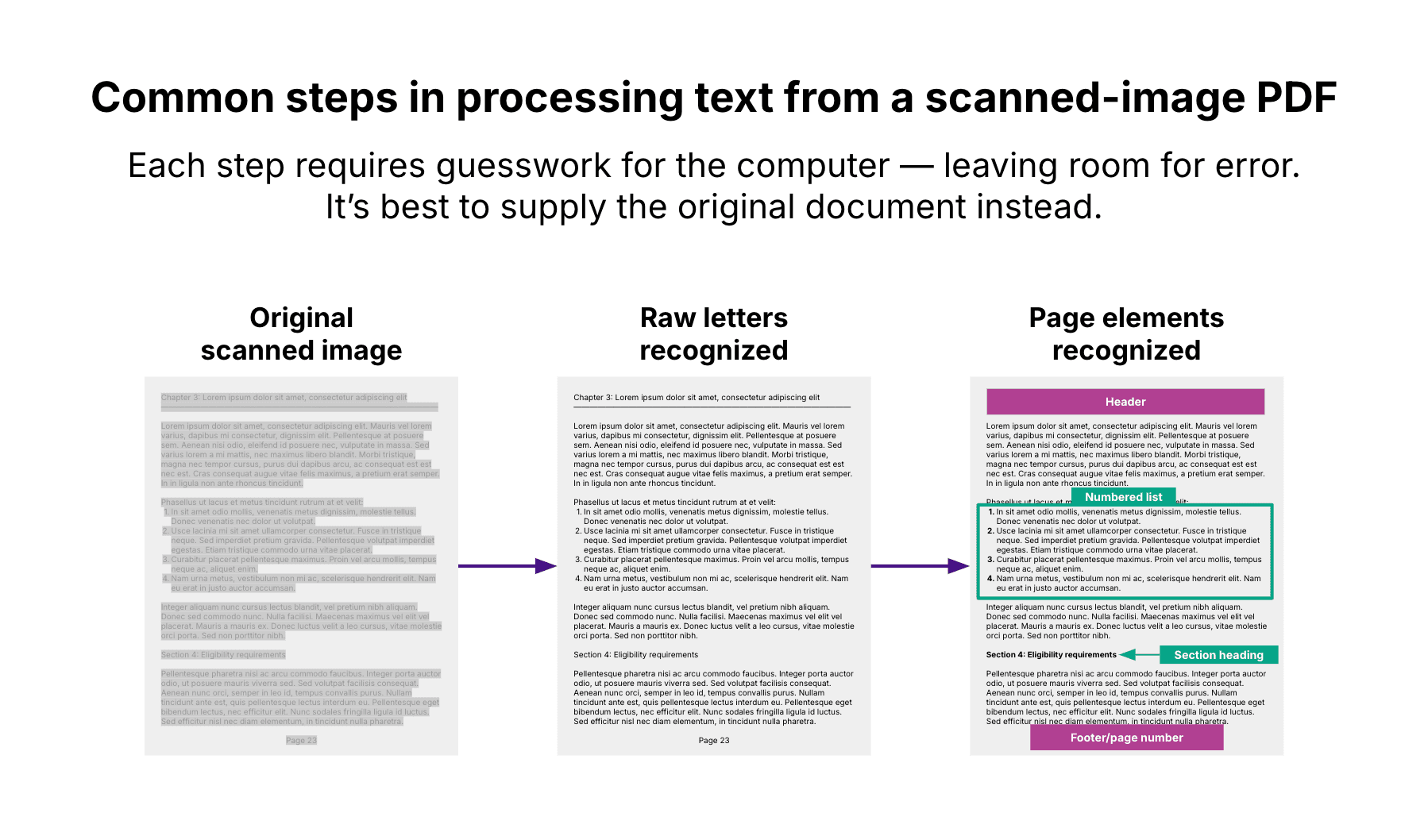
- Content buried in images or scanned PDFs
- Mixed topics in the same section without clear separation
If useful, a simple rule is: one page, one topic, one clear hierarchy, one idea per block.