To measure whether ChatGPT mentions your site, use a repeatable set of prompts, record whether your brand or domain appears, and track those results over time.
Practical way to measure it
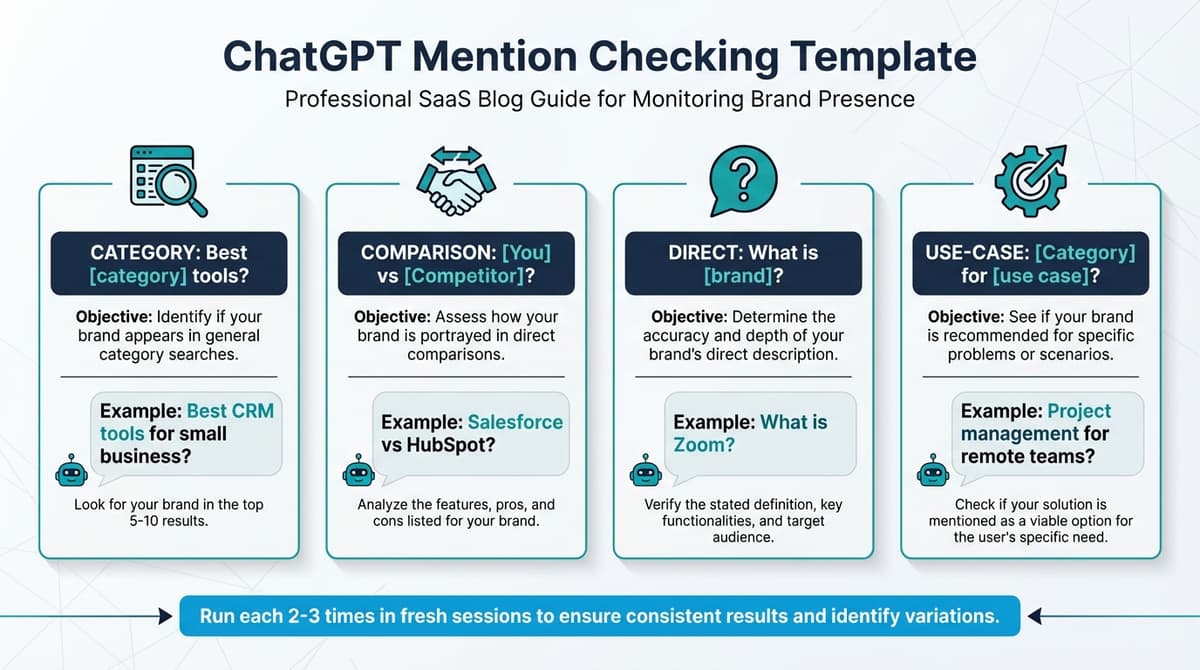
- Build a fixed list of natural-language prompts that real users might ask about your topic, category, or brand.
- Run the prompts in a private/incognito session to reduce personalization effects.
- Record three things for each prompt:
- Whether your brand is mentioned at all.
- Whether your site or a specific page is cited or referenced.
- Whether the mention is accurate and favorable.
- Repeat the same prompts on a schedule so you can compare visibility over time.
Useful metrics
- Branded mention rate: percentage of prompts where your brand appears.
- Domain citation rate: percentage of prompts that reference your site or pages.
- Recommendation inclusion rate: percentage of prompts where your site is included among suggested options.
- Accuracy rate: how often the description matches your actual content.
What to look for in the response
- A direct mention of your brand name.
- A link, source, or reference to your domain.
- A page-level citation tied to the topic you asked about.
- A mention that your competitors are shown instead of you.
Simple tracking setup
- Use a spreadsheet with columns for prompt, date, response, brand mention, citation, page cited, competitor mentioned, and notes.
- Test at least 3 phrasings for the same question to reduce one-off results.
- Compare results by topic cluster, such as product pages, how-to content, or comparison queries.
If you want a quick baseline
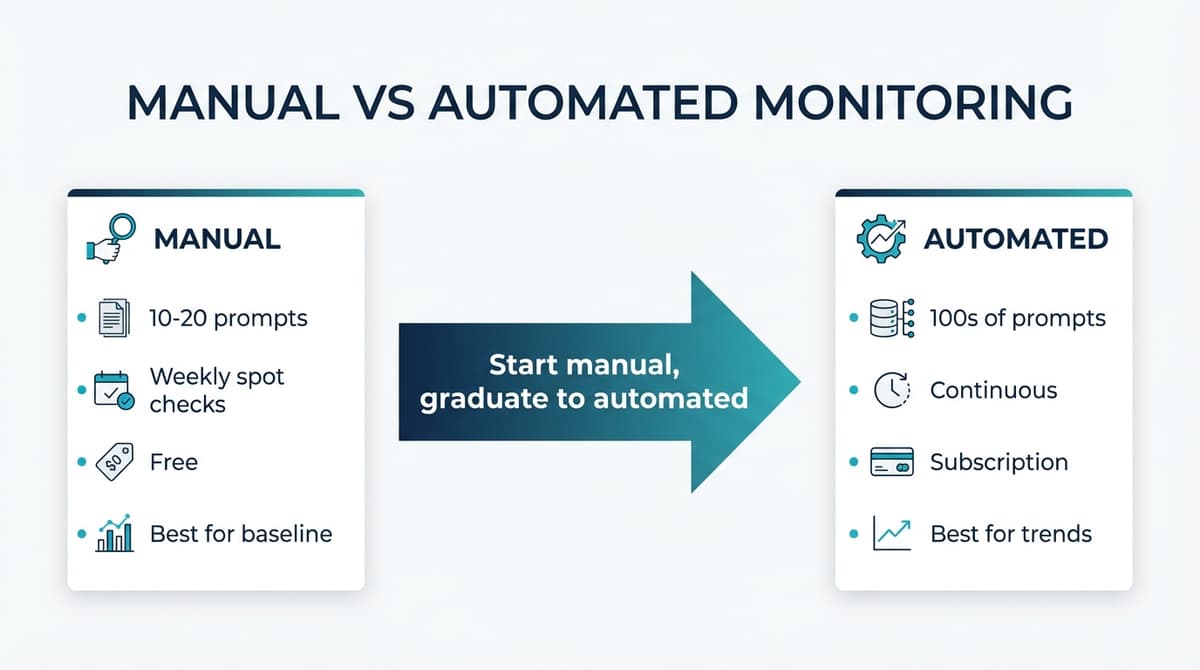
- Test 10 to 20 prompts that match your customers’ real questions.
- Run them once this week and again after content updates.
- Save the full responses so you can compare exact wording and citations later.
If helpful, a simple spreadsheet template for tracking ChatGPT mentions can be provided.