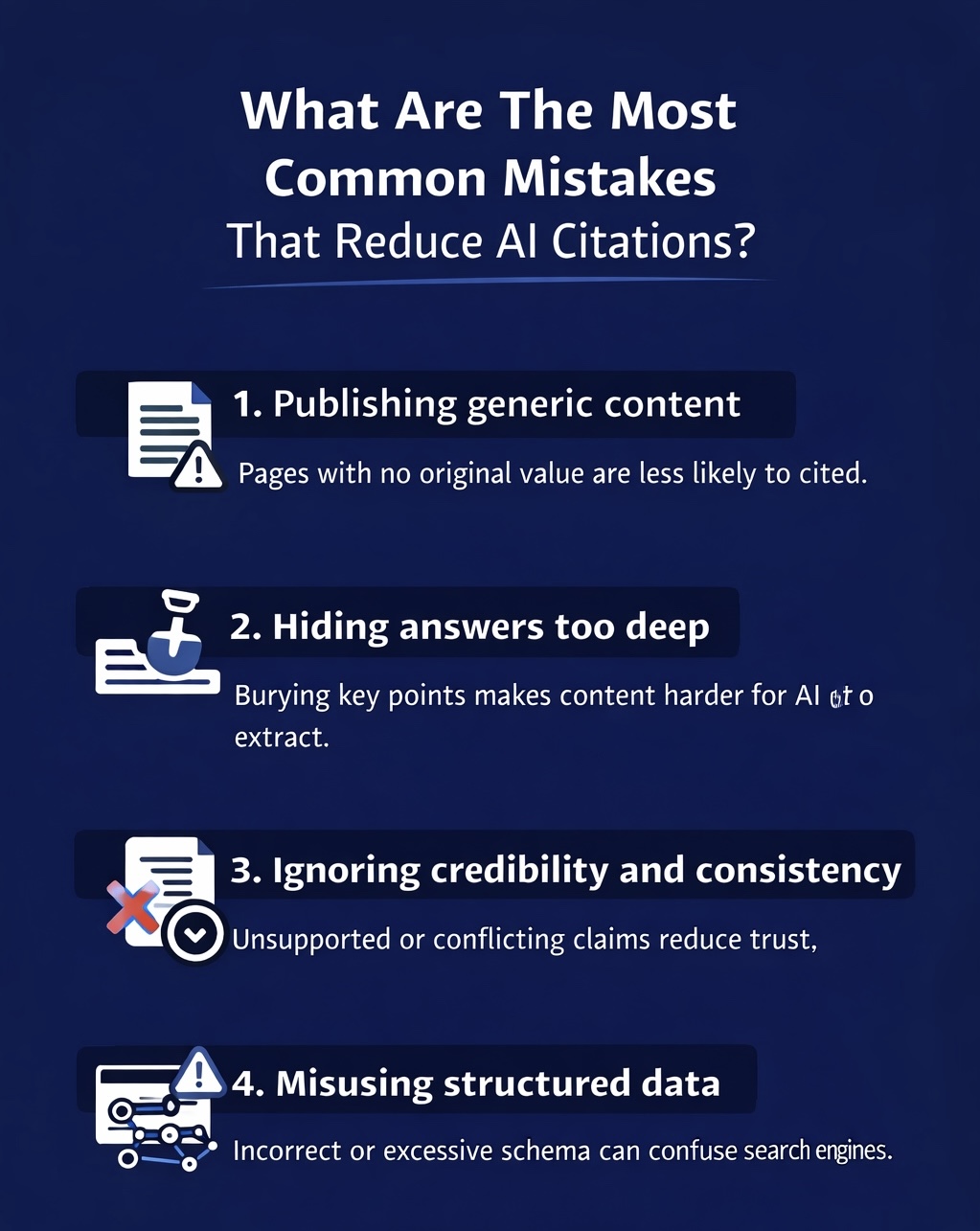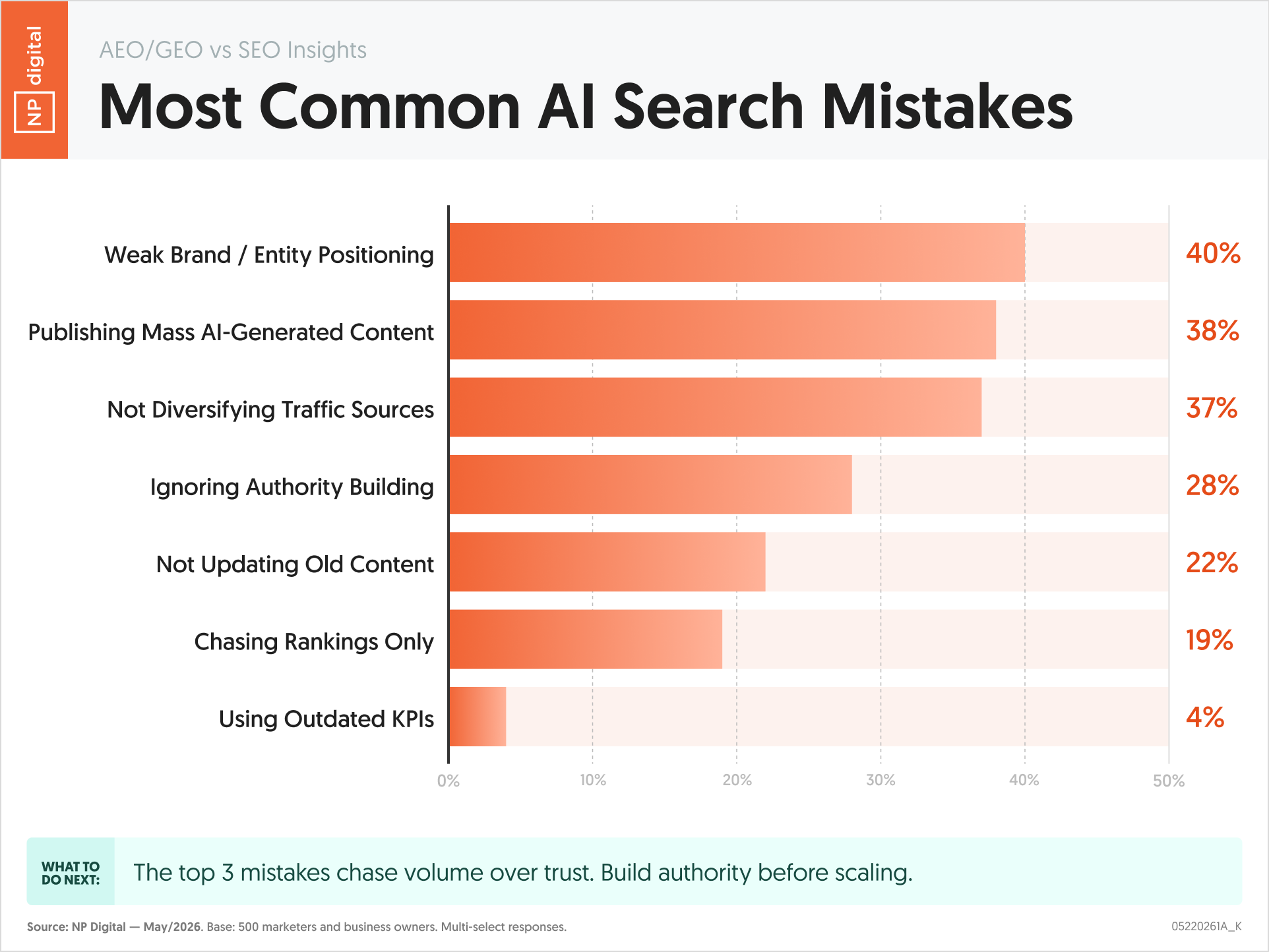
Common mistakes that reduce AI citations usually fall into a few patterns: generic content, weak structure, poor factual support, and technical issues that make content hard for AI systems to extract or trust.
Common mistakes
- Publishing generic, non-specific content that does not give AI systems a clear reason to cite it.
- Hiding the answer deep in long paragraphs instead of using clear headings, summaries, bullets, or FAQ-style structure.
- Failing to include direct, definitive statements that are easy to quote or extract.
- Skipping fact verification or relying on unverified AI-generated claims.
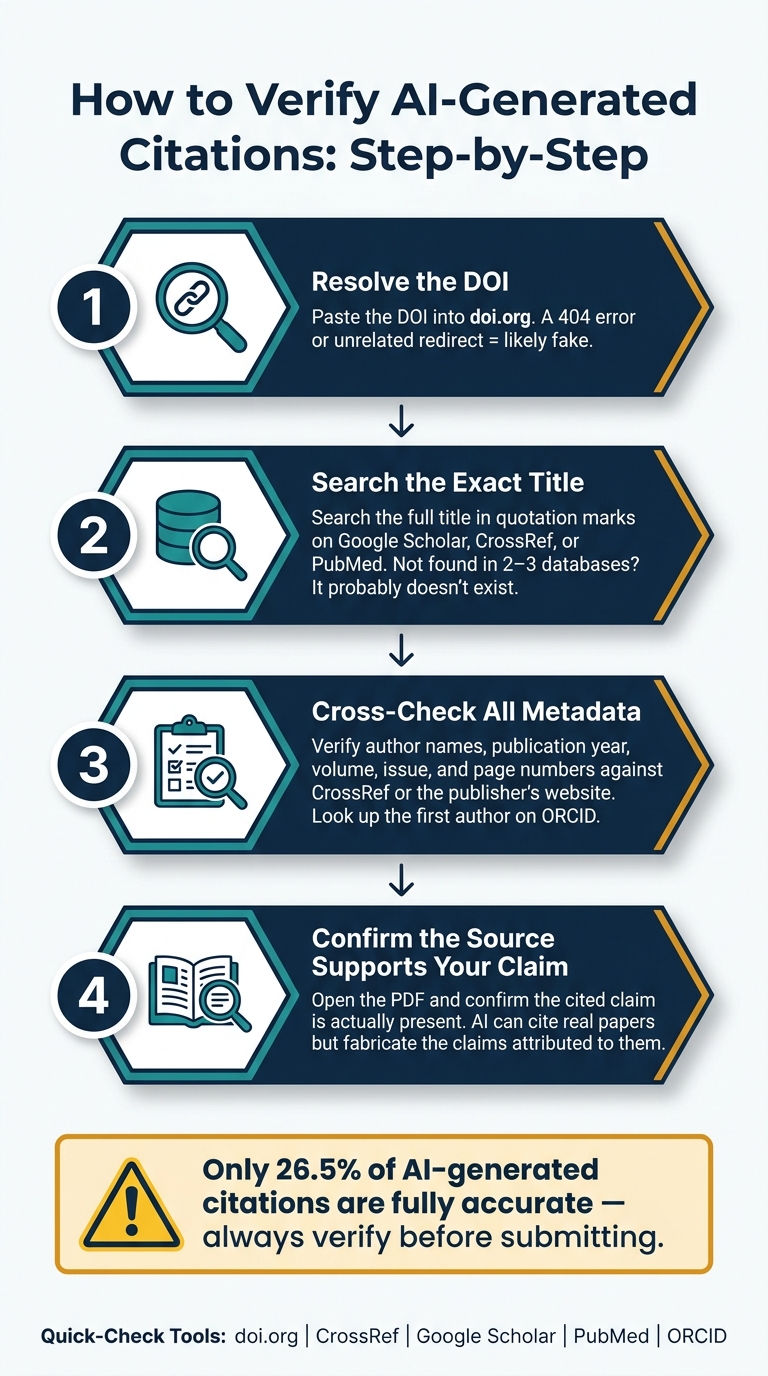
- Copying AI-generated references into a bibliography without checking whether they are real and relevant.
- Ignoring structured data, schema, and clean markup, which can make extraction less reliable.
- Using content that is hard to identify by entity, such as inconsistent naming, missing author info, or weak provenance signals.
- Letting pages become outdated, since freshness and regular updates can affect citation likelihood.
- Focusing only on traditional SEO signals while neglecting AI-specific readability and extractability.
- Blocking crawlers or making pages technically inaccessible, which can prevent citation before content quality even matters.
Practical fixes
- Put the main answer near the top.
- Use short sections, bullets, and tables where appropriate.
- Add clear dates, author details, and source references.
- Verify every factual claim before publishing.
- Keep formatting clean and machine-readable.
If helpful, this can also be turned into a checklist for improving AI citation rate.