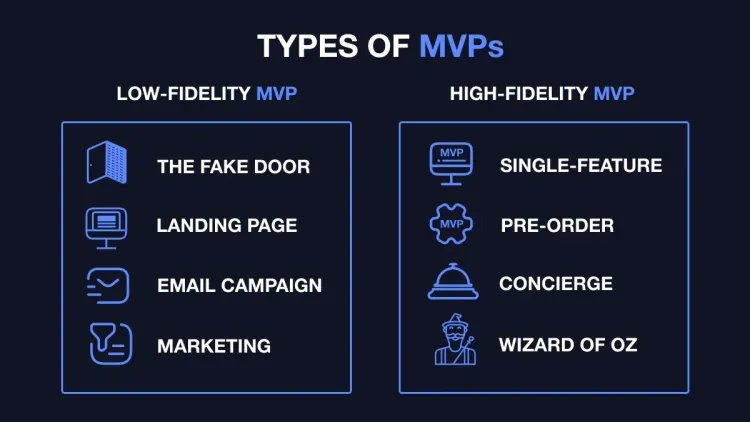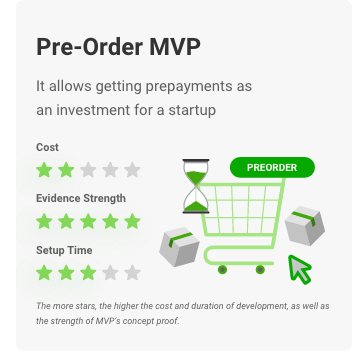
Pre-sell and concierge MVP are two strong validation methods, but they answer different questions: pre-selling validates willingness to pay before you build, while a concierge MVP validates whether users actually want and value the service by delivering it manually first.
- Pre-sell MVP: You ask people to pay, or at least commit financially, before the product exists. This is useful when you want the clearest signal of demand and pricing acceptance, since a pre-order or pre-sale directly tests whether customers will put money down for the idea.
- Concierge MVP: You manually provide the service to a small group of early users, often with high-touch support, and observe what they do, what they value, and what they are willing to pay.
- Best use case for pre-sell: When the product concept is understandable enough to communicate clearly and the main uncertainty is demand or price sensitivity.
- Best use case for concierge: When the value depends on human judgment, personalization, or a workflow that would be expensive or risky to automate too early.
- What each method gives you: Pre-sell gives a strong market signal with minimal build effort; concierge gives deeper learning about user behavior, pain points, and operational costs.
A practical rule is: use pre-sell if you can describe the outcome crisply and want to test demand fast; use concierge MVP if you need to learn how the service should work before investing in automation.
A good validation sequence is often:
- Define one clear hypothesis about the problem and audience.
- Test interest with a landing page, waitlist, or pre-order offer.
- If people are interested, run a concierge version with a small cohort and measure willingness to pay, satisfaction, repeat use, and cost per user.
- Decide whether to build and automate, automate only the costly parts first, or stop/pivot based on the data.
If you want, I can also turn this into a decision tree or a step-by-step validation plan for your specific idea.