Marketing vanity metrics are numbers that look good but do not reliably indicate business results; to avoid them, replace them with actionable metrics tied to revenue, conversions, retention, or customer value.
Use these principles:
- Ask whether the metric drives a decision. If a metric cannot inform a course of action, it is likely vanity data.
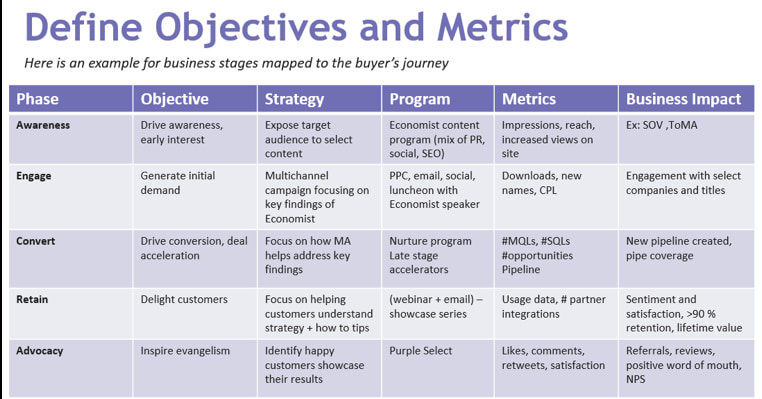
- Tie metrics to business outcomes. Prioritize measures connected to revenue, customer acquisition, retention, or user value rather than surface activity.
- Measure quality, not just volume. For example, track qualified leads, click-to-conversion rate, or engaged subscribers instead of raw follower counts, opens, or pageviews.
- Track the full funnel. Look beyond clicks or likes to what happens next: form fills, purchases, renewals, repeat usage, or retention.
- Use context and benchmarks. Compare metrics against prior performance, benchmarks, and related metrics so you can see whether growth is meaningful.
- Separate leading indicators from lagging results. Use activity metrics only when they clearly predict outcomes, and validate that link with conversions or revenue.
Common vanity metrics to de-emphasize include:
- Pageviews without conversion context.
- Follower counts without engagement or customer impact.
- Email opens without deliverability or downstream action.
- Likes and shares without traffic, leads, or purchases.
- Total subscribers or list size without active engagement.
Better replacements include:
- Qualified leads instead of raw lead volume.
- Click-to-conversion rate instead of click rate alone.
- Net active subscriber growth instead of list growth.
- Website conversion rate by source instead of traffic volume.
- Retention, renewals, and repeat purchase rate instead of one-time activity counts.
A practical test is: “Can this metric lead to a decision or action?” If the answer is no, it should probably not be a headline KPI.
If you want, I can turn this into a one-page marketing KPI framework or a dashboard template that avoids vanity metrics.