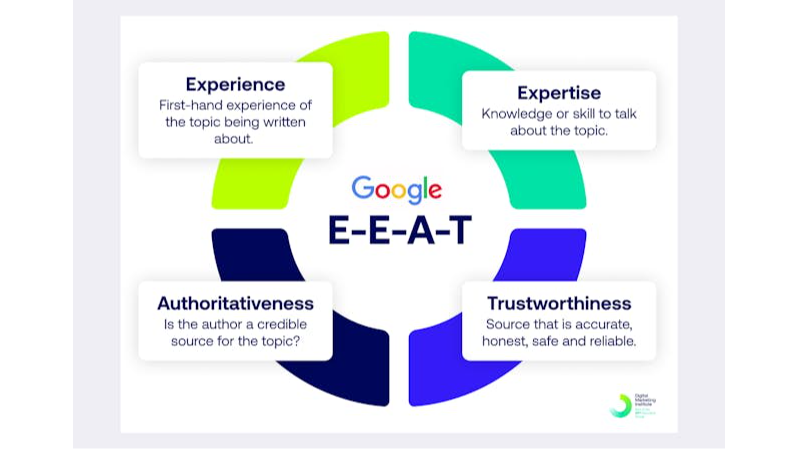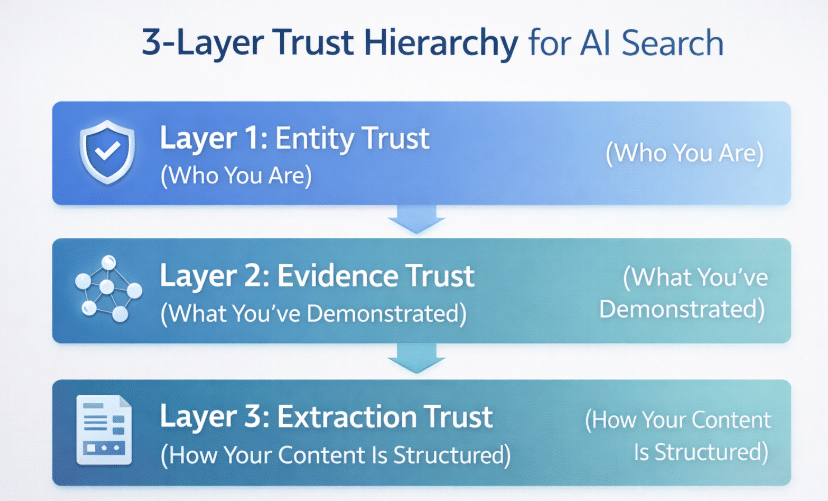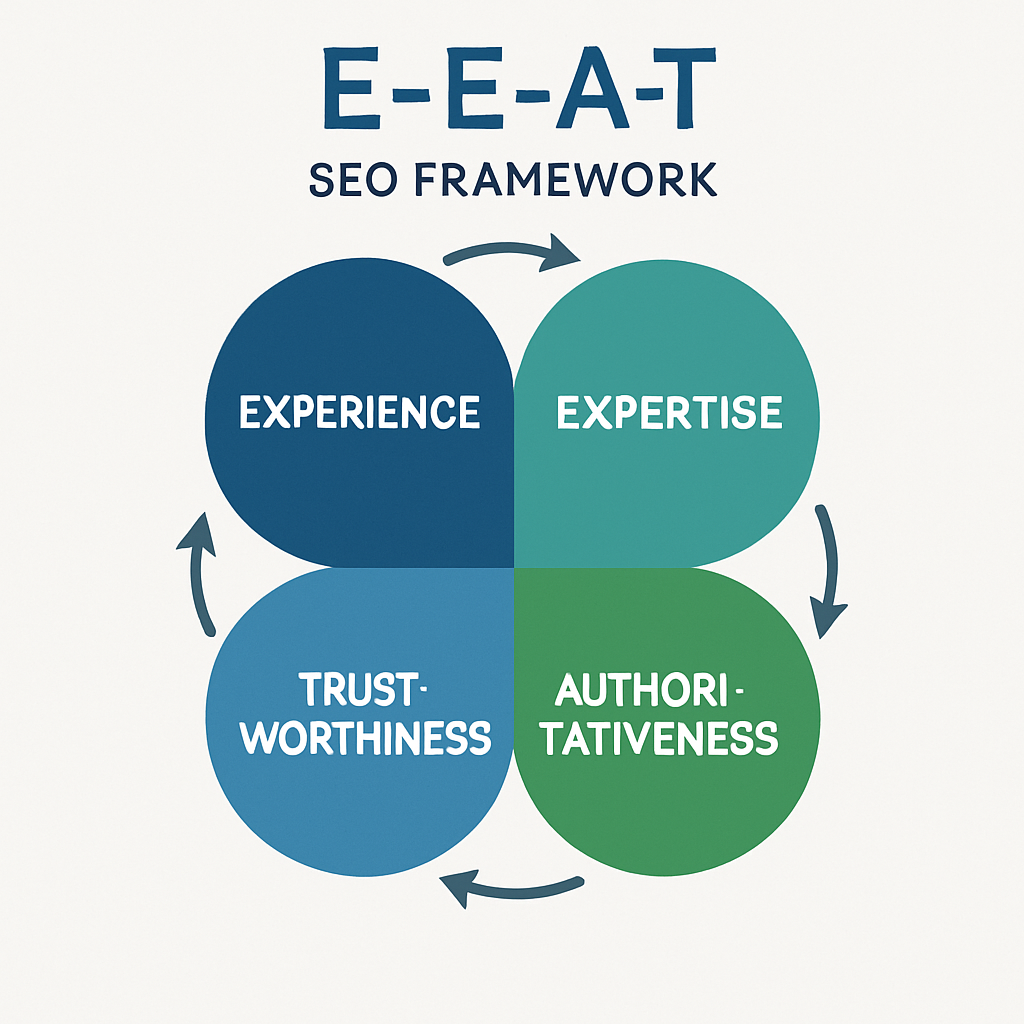
E-E-A-T stands for Experience, Expertise, Authoritativeness, and Trustworthiness, and for AI search, trust is the key signal that determines whether content is considered reliable enough to cite.
What matters most for AI search
- Experience: First-hand knowledge or use, shown through concrete examples, original observations, or direct involvement.
- Expertise: Clear subject knowledge, often supported by author credentials, specialization, or deep topical coverage.
- Authoritativeness: Recognition from others, such as mentions, backlinks, or being cited by reputable sources.
- Trustworthiness: Accuracy, honesty, safety, transparency, and consistency across the page and site.
Practical trust signals for AI search
- Named authors with visible bios and relevant credentials.
- Clear sourcing and citations to verifiable references.
- Transparent editorial policies, contact information, and about pages.
- Secure, technically sound pages with HTTPS and good usability.
- Fresh, well-maintained content with visible update dates.
- Consistent business or entity information across the web.
Why this matters
Google’s quality rater guidance emphasizes that untrustworthy pages have low E-E-A-T no matter how experienced, expert, or authoritative they seem. For AI search systems, that means trust signals can affect whether content is selected, summarized, or cited.
Simple takeaway
To improve visibility in AI search, focus on:
- Showing who created the content.
- Proving why they are qualified.
- Citing reliable sources.
- Making the site transparent and technically trustworthy.
- Keeping information current and consistent.