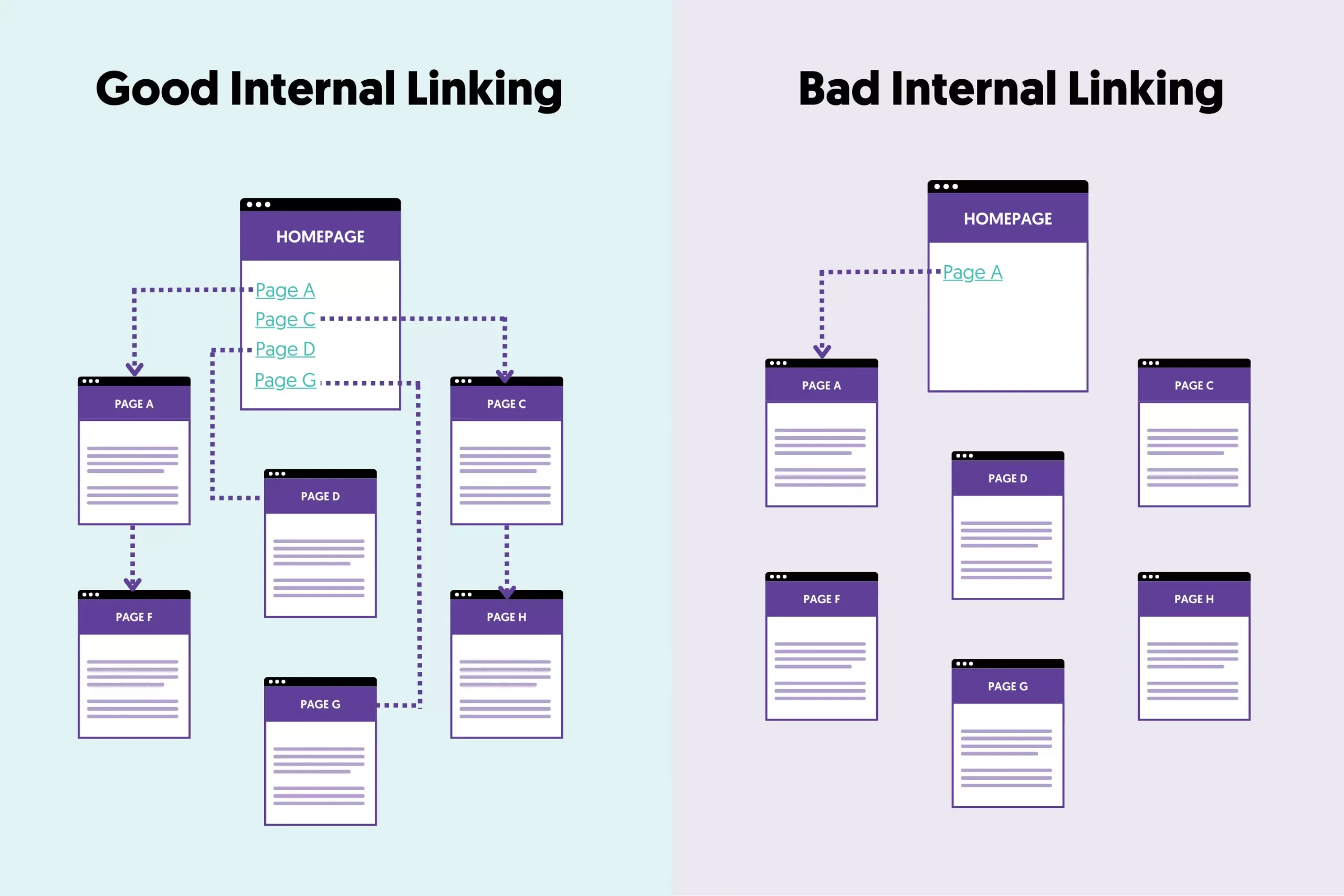
Internal Linking Strategies for AI-Friendly Websites
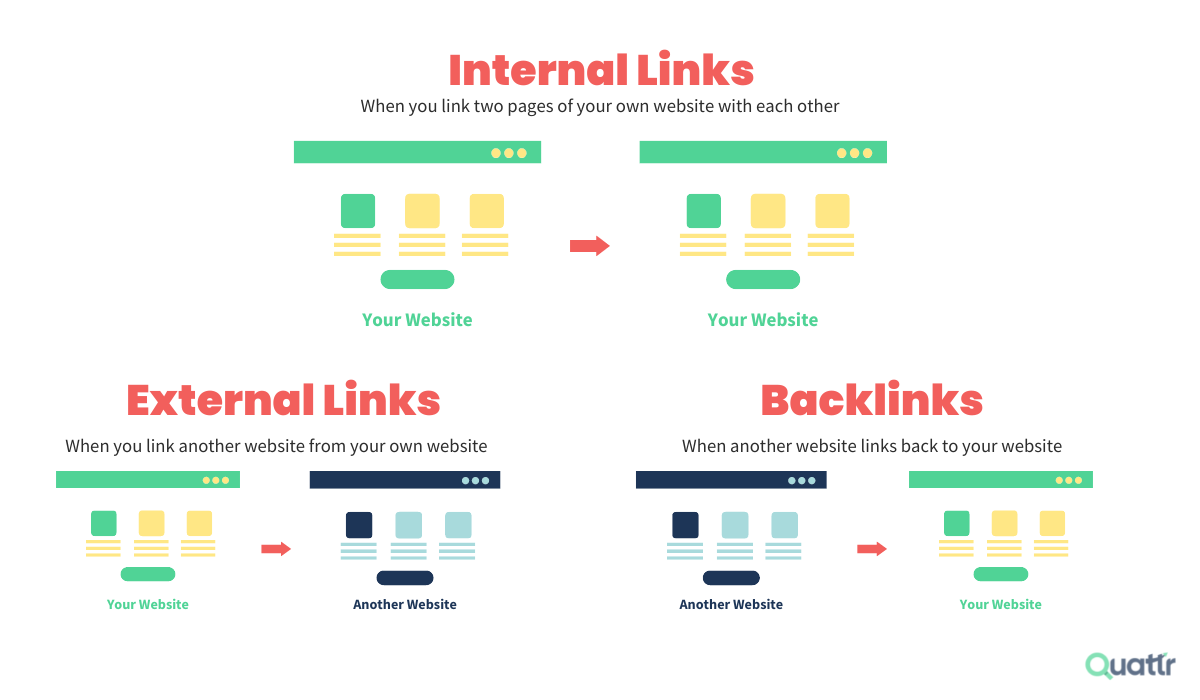
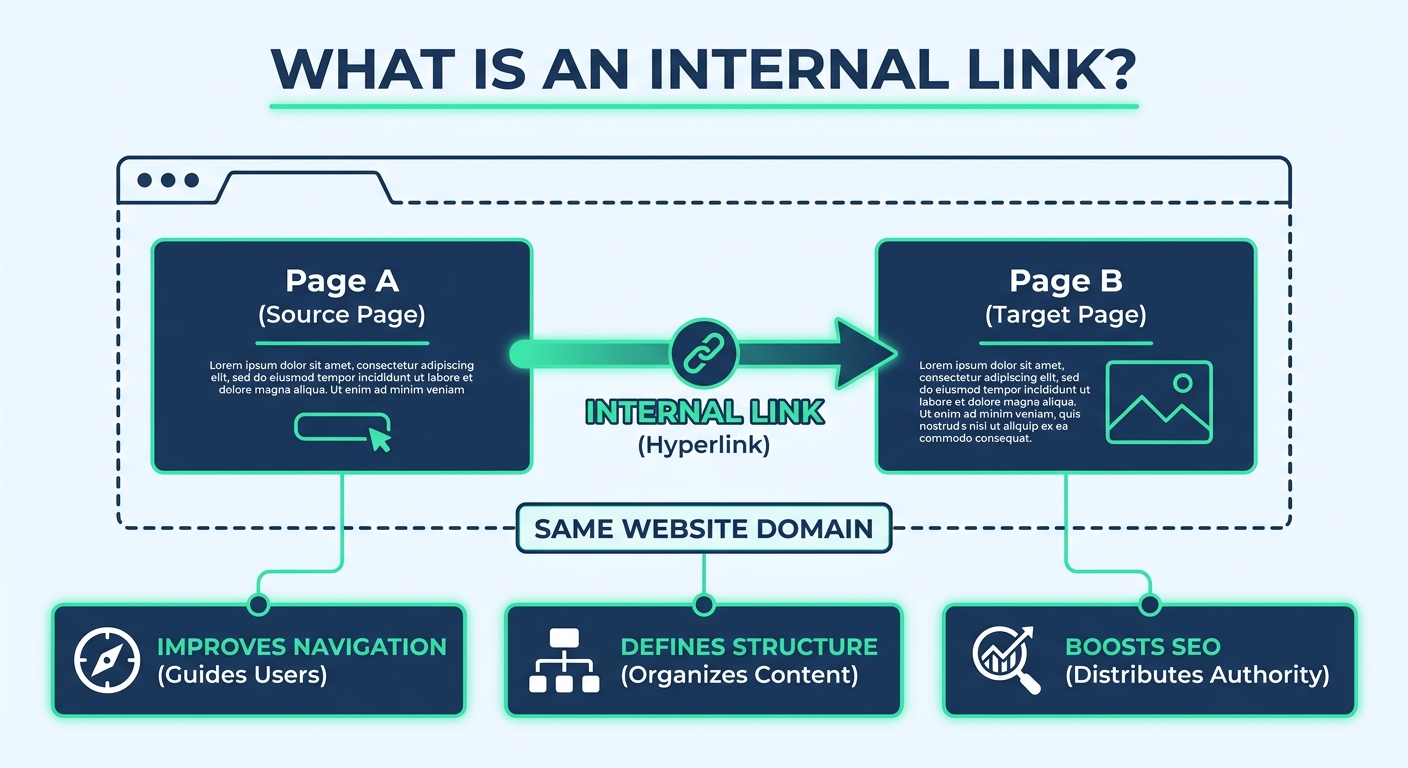
Internal linking works best when it helps both users and crawlers understand your site’s structure, topics, and most important pages. For AI-friendly websites, the goal is to create clear content clusters, use descriptive anchor text, and keep key pages easy to reach.
Practical strategies
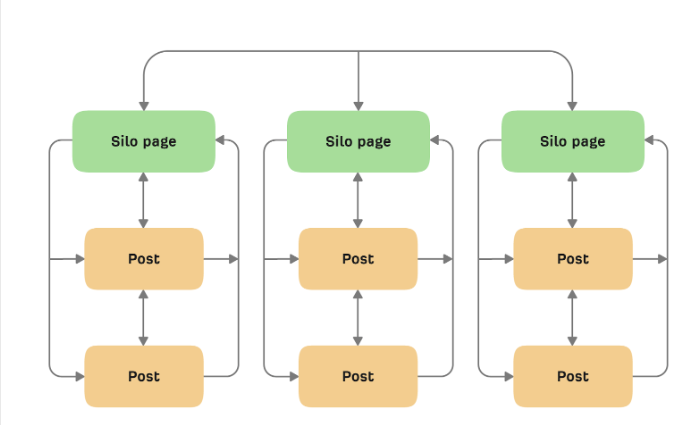
- Build a pillar-and-cluster structure: one strong hub page should link to related supporting pages, and those supporting pages should link back to the hub.
- Keep important pages within about 3 clicks of the homepage to reduce crawl depth and improve discoverability.
- Use descriptive, natural anchor text instead of vague phrases like “click here” or “read more.”
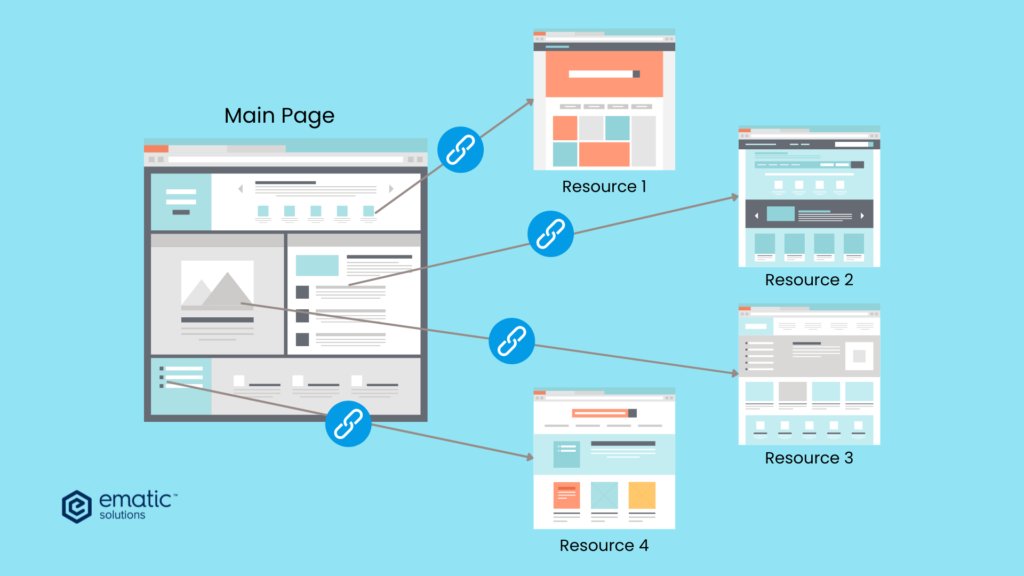
- Link contextually within the body content, not just in menus or footers, so the relationship between pages is clearer.
- Add internal links from older, already-indexed pages to new content to prevent orphan pages and speed discovery.
- Create a regular internal link audit to fix broken links, find orphan pages, and rebalance links to priority pages.
- Avoid overloading pages with too many links; keep links purposeful and relevant rather than repetitive or spammy.
- Vary anchor text naturally while still keeping it aligned with the destination page’s topic.
A simple AI-friendly linking model
- One hub page for the main topic.
- Several supporting pages that each cover a subtopic.
- Links between related supporting pages when the connection is useful.
- A clear path from informational pages to commercial or conversion pages when intent shifts.
Quick checklist
- No orphan pages.
- Key pages reachable within 3 clicks.
- Descriptive anchors used consistently.
- Internal links added to every new page soon after publishing.
- Regular audits scheduled.
If helpful, a sample internal linking map can be drafted for a blog, SaaS site, or local business site.