Common reasons a landing page fails to convert interested visitors into leads
A landing page usually fails when something gets in the way of a visitor taking the one desired action. Based on the results you shared, the most common causes are:
-
Wrong audience targeting
The page may be attracting people who aren’t a good fit for the offer. -
Message mismatch
The headline, tone, or promise on the landing page doesn’t match the ad, link, or expectation that brought the visitor there. -
Unclear or weak value proposition
Visitors can’t quickly understand what they’ll get, why it matters, or why they should act now. -
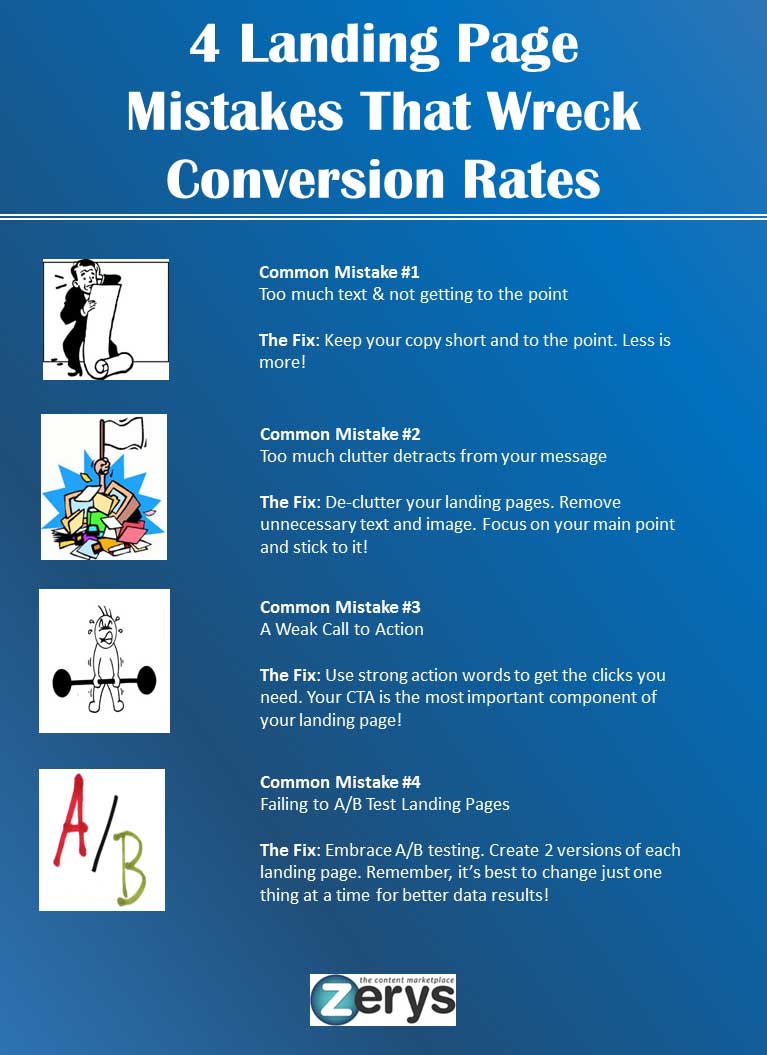
Too much clutter or too many distractions
Extra navigation links, competing buttons, side offers, or unnecessary elements can pull attention away from the main goal. -
Too much text
Large blocks of copy make the page harder to scan and can cause visitors to leave before they reach the CTA. -
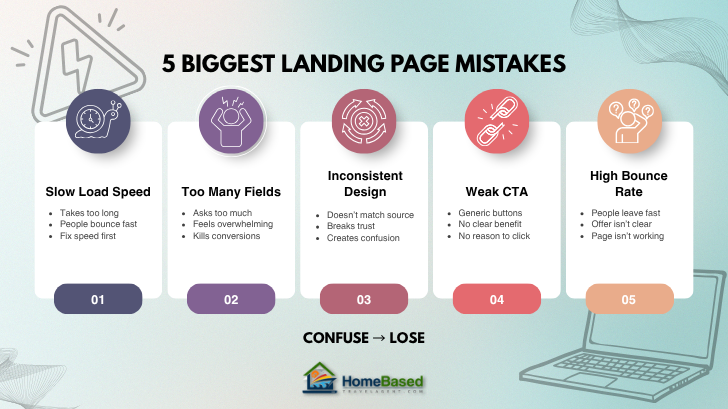
Weak call to action
The CTA may be vague, uninspiring, or not visually prominent enough. -
Too much friction in forms
Asking for too many fields or personal details can discourage signups. -
Low trust
Missing reviews, testimonials, social proof, security cues, or credibility signals can make visitors hesitate. -
No urgency or motivation to act now
If there’s no clear reason to convert immediately, visitors may postpone the decision and never return. -
Slow load times or poor mobile experience
A page that loads slowly or is difficult to use on mobile can lose interested visitors quickly.
In short
A landing page fails to convert when it creates confusion, friction, or distraction instead of a clear path to action. The strongest pages usually have:
- one focused goal
- a message that matches visitor intent
- a strong CTA
- minimal distractions
- enough trust and clarity to make the next step feel easy
If you want, I can also turn this into a short checklist or a diagnostic framework you can use to review a landing page.