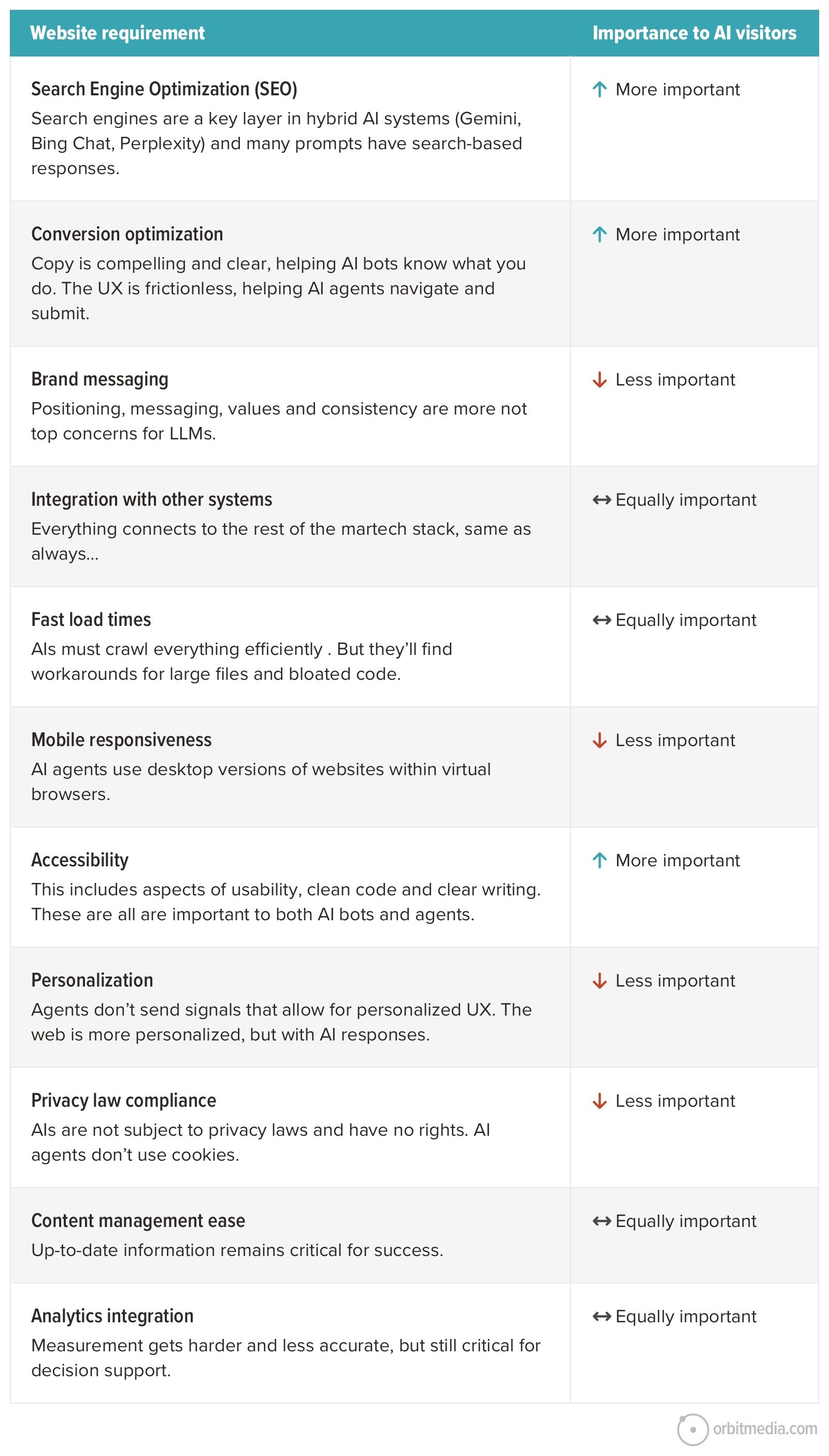
A website becomes more useful to AI systems when its content is easy to crawl, clearly structured, semantically marked up, and kept current. The most effective improvements are usually the same ones that help human visitors: clean HTML, readable content, and fast, reliable pages.
Practical ways to improve AI usefulness
- Use semantic HTML: prefer elements like
header,nav,main,article,section,button, andaso AI systems can better understand page structure and actions. - Add structured data with JSON-LD for important entities such as
Organization,Person,Product,Service,FAQ, andArticleso machines can identify key facts more reliably. - Keep important information in visible HTML text, not only in images, PDFs, or scripts, so crawlers and AI parsers can extract it easily.
- Create a clear heading hierarchy with one main topic per page and descriptive subheadings to make the content easier to summarize.
- Use short paragraphs, lists, and tables for factual content that AI systems may quote or transform into answers.
- Maintain strong internal linking and logical site architecture so related pages are easy to discover and connect.
- Publish an XML sitemap and keep robots rules clean so important pages are discoverable.
- Use canonical tags on duplicate or similar pages so AI systems can identify the preferred version.
- Keep pages fast, mobile-friendly, and accessible, since crawlability and rendering quality affect how well systems can process them.
- Make content fresh and verifiable by showing authorship, update dates, citations, sources, or other trust signals.
- Ensure important interactions are actionable and accessible, with clear labels, visible controls, and stable layout.
A simple checklist
- Put the main facts in HTML text.
- Add schema markup to key pages.
- Use descriptive headings and internal links.
- Publish sitemap and canonical URLs.
- Remove crawl blockers from essential pages.
- Keep the site fast, mobile-friendly, and accessible.
- Update content regularly and show dates and authors.
If helpful, a page-by-page checklist for a specific site type such as a blog, business site, or product catalog can be provided.